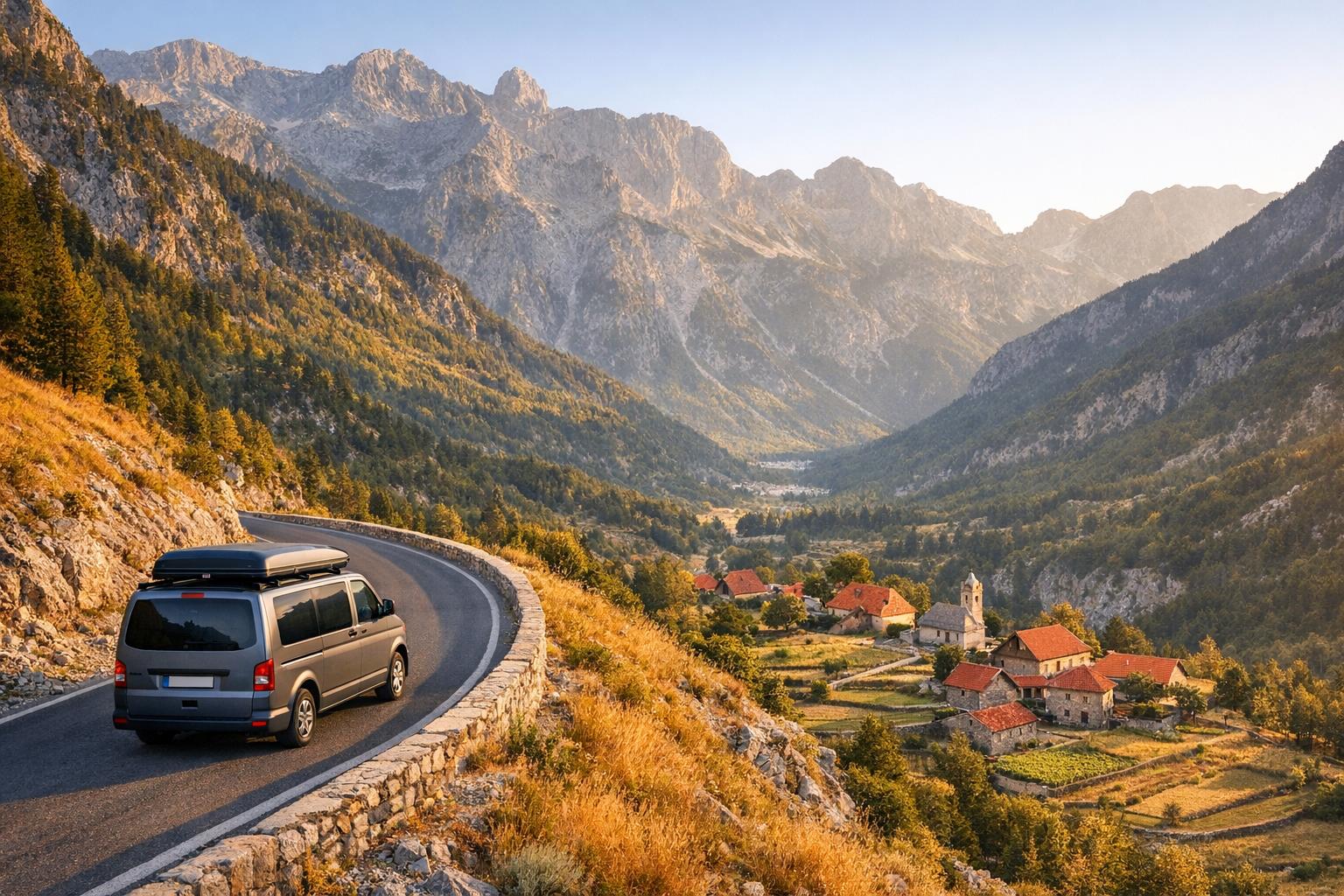
Ultimate Guide to Albanian Mountain Village Road Trips
Embark on an unforgettable journey through Albania's mountain villages, where time seems to stand still. With breathtaking landscapes, welcoming locals, and improved infrastructure, this guide covers everything you need to know for a smooth camper van adventure. From top routes like the Northern Alps Loop to practical tips on road conditions and vehicle essentials, here's what to expect:
- Top Routes: Northern Alps, Central Mountain Circuit, and Southern Highlands.
- Best Time to Visit: Late May to September for clear roads and pleasant weather.
- Key Villages: Theth, Valbona, and Përmet, each offering unique scenery and experiences.
- Travel Tips: Stock up on cash and supplies, use offline maps, and choose a van with high ground clearance.
Wild camping is allowed in Albania, adding flexibility to your trip. Companies like WildGoat Albania provide camper vans starting at €120 per day, complete with essentials like kitchens and solar panels. Ready to explore? Dive into the details below.
Albania in a Campervan 🇦🇱 Is It Safe? Theth, Blue Eye Hike & FAQ's
sbb-itb-c1cbda2
Top Mountain Village Routes for Camper Vans
Albania's mountain roads offer a thrilling escape from the busy coastal highways. These routes combine breathtaking scenery with authentic local experiences. Each path has its own character, shaped by the rugged terrain and the unique communities that call these areas home.
The Northern Alps Loop is perfect for adventurers, with its steep, narrow climbs into the Albanian Alps. This route connects Shkodra, Theth, and Valbona. A standout feature is the Theth to Valbona hiking trail, a 17-kilometre trek that reaches an altitude of 1,759 metres and takes most hikers 6 to 8 hours to complete. Not into hiking? No problem. The Lake Koman ferry offers an equally stunning experience, gliding through fjord-like waters surrounded by dramatic limestone cliffs. Before heading out, make sure to refuel in Shkodra, as fuel stations are scarce in the remote valleys. If you need private van transport, budget around €10, and remember to carry cash in Albanian Lek, as ATMs are hard to find in Theth and Valbona.
The Central Mountain Circuit offers a gentler introduction to mountain driving. This route winds through the Dinaric Alps, connecting Kruja, Berat, and the areas surrounding Lake Ohrid. With mostly paved roads, it’s suitable for drivers with less mountain experience. Along the way, you’ll encounter Ottoman-era stone cities, hilltop castles, and olive groves - a treat for history buffs.
The Southern Highlands Route combines untamed landscapes with rich cultural experiences. Highlights include Gjirokastra’s impressive fortress and its UNESCO-listed stone-roofed houses. The journey continues through Përmet and the Vjosa Valley, where the scenery shifts from rugged peaks to gentle plains. The roads here stick to scenic backroads, encouraging a slower, more immersive pace.
"Albania is raw, real, and full of contrast. It's not perfectly polished - and that's what makes it exciting".
For the best experience, plan your trip in May, June, or September. These months offer driving with a camper van in Albania and tips while avoiding the intense summer heat and the risk of winter road closures. Whether you're a seasoned road-tripper or new to camper van adventures, these routes promise unforgettable journeys. For an even smoother ride, consider WildGoat Albania’s fully-equipped camper vans, designed specifically for Albania’s rugged mountain roads.
Mountain Villages You Should Visit
Albania's mountain villages each have their own charm, blending stunning natural landscapes with a rich sense of history. Here’s a closer look at what makes these destinations worth visiting.
Theth, tucked away in the Albanian Alps, is now easier to reach thanks to the SH21 road from Shkodër, paved in 2021. This village is steeped in history, with landmarks like a 19th-century church and the 400-year-old Lock-in Tower. Nature lovers will appreciate Grunas Waterfall, a 25-metre cascade accessible via a hike that can take anywhere from 45 minutes to 2 hours. For the adventurous, the Blue Eye natural pool is a highlight, though getting there involves a demanding 3-hour trek. Theth isn’t a typical village with a central square; instead, it’s spread out across the landscape. With around 370 residents and just one small mini-mart, it’s wise to stock up on cash and supplies in Shkodër before heading out with these essential tips for first-time camper van travelers. If you’re driving, avoid the southern route, as it’s a rough gravel track suitable only for 4WD vehicles.
Valbona offers a more secluded vibe and is best accessed via the breathtaking Lake Komani ferry, which takes about 2.5 hours. Located within Valbona National Park in the Accursed Mountains, the village is the starting point for the 17-kilometre Valbona-Theth hiking trail, which climbs to an altitude of 1,759 metres. Guests can enjoy hearty, home-cooked meals featuring local cheese, meat, and fresh bread at family-run guesthouses. Since mobile reception is patchy, downloading offline maps is a smart move. Keep in mind that some roads to guesthouses are rugged and require 4WD vehicles.
Përmet stands out as a haven for camper van travelers, thanks to Albania’s relaxed wild camping rules, which allow overnight stays along picturesque riverbanks. Its convenient location makes it a great base for venturing into the surrounding highlands while still enjoying modern amenities.
Practical Tips for Mountain Camper Van Travel
These driving and camping tips will help ensure your Albanian mountain adventure goes off without a hitch, complementing the routes and villages mentioned earlier.
Vehicle Requirements and Features
Albania's mountain roads demand a van capable of handling rough terrain. Look for a vehicle with high ground clearance to tackle uneven and unpaved roads. As Lifejourney4two aptly described, "The roads are a patchwork quilt of smooth asphalt and jarring potholes". To make your journey more comfortable, ensure your van is equipped with solar panels for off-grid power, as well as a fully functional kitchen and bathroom to stay self-sufficient during longer trips.
Before setting off, make sure you have all the required safety gear, including a reflective vest, warning triangle, and first aid kit. If your vehicle is from a left-hand drive country, don't forget to install beam deflectors to adjust your headlights for right-hand driving. Also, double-check that your insurance policy covers travel in Albania - some European policies may need additional coverage or special permissions.
For those renting, WildGoat Albania offers camper vans already outfitted with these essential features, making it easier to hit the road with confidence.
Road Conditions and Navigation
Albania's mountain roads vary widely - from smooth asphalt to rough gravel. Defensive driving is key, especially since livestock often wander onto rural roads and have the right of way. To avoid getting lost, download offline maps before heading into remote areas like Valbona or other highland regions. Reliable navigation is a must when exploring these rugged landscapes.
What to Pack
Prepare carefully before venturing into remote villages, as shops and services can be sparse. Stock up on cash and supplies in larger towns, and pack the following essentials:
- Weather-appropriate clothing to handle sudden changes in temperature.
- Extra fuel, as petrol stations can be few and far between in mountain regions.
- Water purification tablets for safe drinking water.
- A torch for low-light conditions.
- A basic repair tool kit to handle minor vehicle issues.
With the right preparation, you'll be ready to explore Albania's breathtaking mountain landscapes with peace of mind.
When to Visit: Seasonal Travel Guide
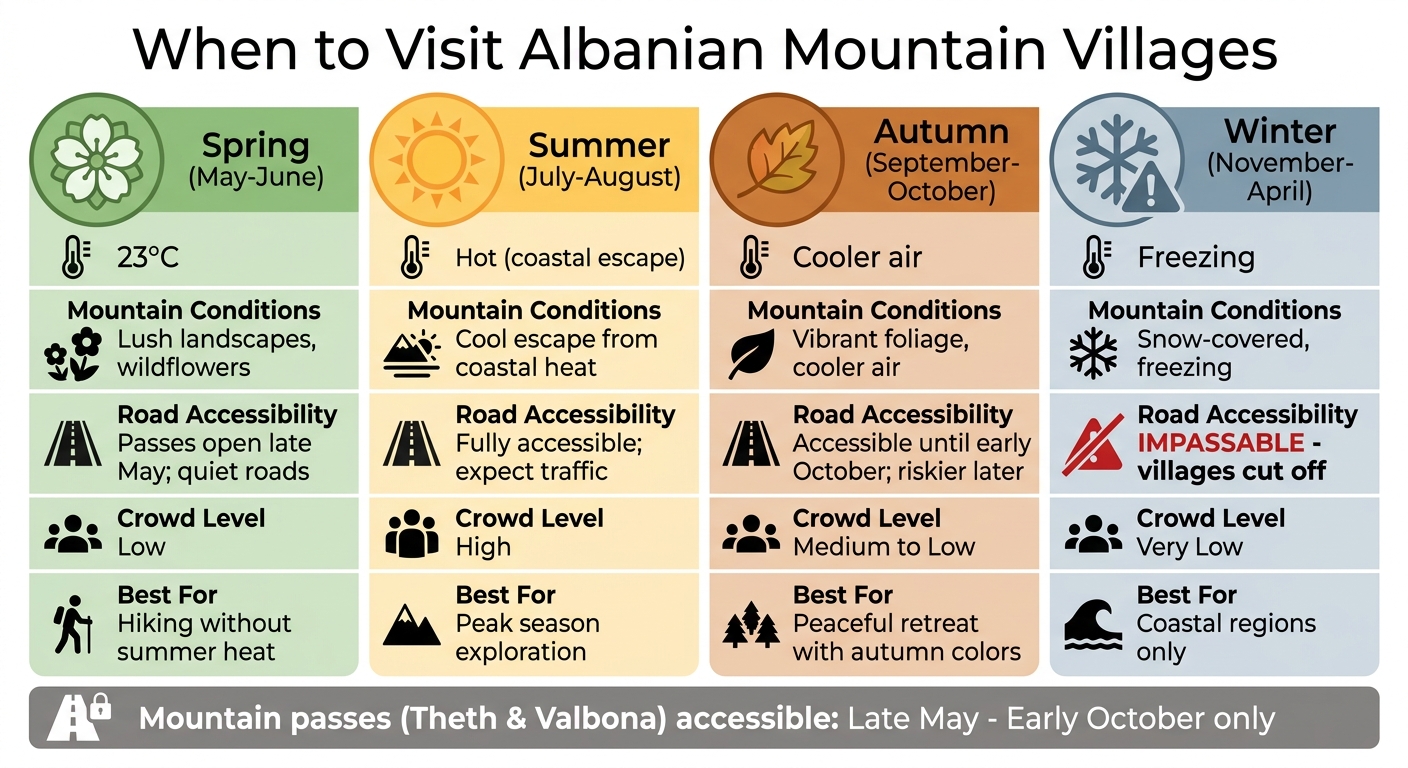
Albanian Mountain Village Road Trip Seasonal Guide
Timing your trip to match road conditions is crucial for a safe camper van adventure in Albania. High mountain passes, such as those leading to Theth and Valbona, are only accessible between late May and early October. Here's a breakdown of what to expect in each season:
Spring and Summer Travel
If you're planning to explore Albania's mountains, May and June are some of the best months to visit. The landscapes come alive with blooming wildflowers, and temperatures hover around a pleasant 23 °C - ideal for hiking without the intense summer heat. Roads are quiet, as the tourist season hasn't fully kicked off yet. By late May, the snow clears from mountain passes, making remote villages accessible again after months of isolation.
In July and August, the mountains become a popular escape from the coastal heat. Roads are in great condition, but you'll encounter more traffic and busier villages. These months are perfect if you don’t mind sharing the trails with other adventurers.
Autumn Travel
September offers stable weather, warm days, and fewer crowds, making it a great time for a peaceful mountain retreat. Roads remain in good shape, and the experience feels more relaxed compared to the busy summer months. By October, the highlands take on stunning autumn colors, but the first rains can make road conditions tricky. As the month progresses, driving becomes less predictable, and the transition to winter begins.
Winter Travel Considerations
From November to April, Albania's mountain villages are essentially off-limits. Heavy snow and freezing temperatures close roads, cutting off access to these remote areas. Attempting to navigate mountain passes during this time isn't just difficult - it’s outright dangerous. If you're visiting Albania in winter, stick to coastal regions and lowland cities where travel is safer and more practical. Save the mountain adventures for warmer months.
| Season | Mountain Conditions | Road Accessibility | Crowd Level |
|---|---|---|---|
| Spring (May–June) | Lush landscapes, wildflowers | Passes open late May; quiet roads | Low |
| Summer (July–Aug) | Cool escape from coastal heat | Fully accessible; expect traffic | High |
| Autumn (Sep–Oct) | Vibrant foliage, cooler air | Accessible until early October; riskier later | Medium to Low |
| Winter (Nov–Apr) | Snow-covered, freezing | Impassable; villages cut off | Very Low |
Plan Your Albanian Mountain Village Road Trip
Albania's mountain villages offer a rare glimpse into an alpine lifestyle untouched by mass tourism. From the stone homes of Theth to Valbona’s scenic trails and the soothing thermal springs near Përmet, these highlands are a treasure trove for those willing to venture off the beaten path. However, navigating Albania’s winding mountain roads and unpredictable weather requires careful planning to make the most of your trip.
Travelling by camper van is a game-changer for exploring these remote regions. It gives you the freedom to adapt your schedule to road conditions or unexpected weather, while also bypassing the challenge of limited accommodation in smaller villages. This flexibility pairs perfectly with routes like the Northern Alps Loop, the Central Circuit, or the Southern Highlands, as described earlier. Companies like WildGoat Albania offer camper vans starting at €120,00 per day (with a five-day minimum), along with 24/7 local support and insider tips for mountain adventures - ideal for German travellers accustomed to similar alpine terrain back home.
Key Planning Tips
- Book in Advance: Secure your camper van and map out your routes at least 4–7 days ahead. For example, the 100-km Northern Alps Loop takes around 4–5 hours of driving, so plan accordingly.
- Navigation Tools: Use offline mapping apps to ensure you stay on track in areas with limited signal.
- Travel Documents: EU citizens need an international driving permit and green card insurance to drive in Albania.
- Pack Smart: Bring layers for unpredictable weather and set daily itineraries with backup stops. Keep in mind that mountain passes are usually only accessible between late May and early October.
- Budget Wisely: Expect to spend around €150,00–250,00 per person for fuel and camper rental on a typical Northern Alps route. Wild camping is free but requires self-sufficiency, while campsites cost €10,00–20,00 per night and include amenities like showers and electricity.
Why Planning Matters
Proper planning not only helps you stick to your budget but also ensures a smoother journey through Albania’s rugged mountain terrain. Efficient routing can cut down on fuel costs, and expert advice from providers like WildGoat Albania can help you avoid potential mishaps, such as breakdowns on uneven roads.
With the right preparation, Albania’s mountain villages become more than just a destination - they turn into an unforgettable adventure. A well-equipped camper, realistic timing, and a solid plan will lead you to places most travellers never get to see.
FAQs
Do I need a 4x4 to reach Theth and Valbona?
For the mountain roads to Theth and Valbona, a 4x4 vehicle is highly recommended because of the rugged and demanding terrain. That said, cars with high ground clearance and appropriate tyres might also manage the trip, but this depends heavily on the current condition of the roads. It's essential to check for up-to-date road accessibility information before setting off.
How much cash should I carry for remote villages?
When exploring remote Albanian villages, it's wise to bring enough cash, as ATMs and card payments are often not an option. A practical rule of thumb is to budget around €50–100 per day (or the equivalent in lek) for essentials like meals, fuel, and small purchases. Make sure to withdraw cash in larger towns before venturing into these isolated areas, and always have some extra funds set aside for emergencies. Keep your cash secure and avoid carrying excessive amounts to reduce potential risks.
Where can I safely wild camp in the mountains?
Wild camping in Albania's mountains can be a safe and rewarding experience if you stick to a few important guidelines. Opt for locations that are commonly used for wild camping, steering clear of protected areas, private lands, or restricted zones. Look for flat, stable ground to set up your tent, and make sure you're a good distance away from water sources to help reduce environmental impact. Stay as low-key as possible to avoid drawing unnecessary attention. Lastly, always review local regulations and, if possible, consult locals or seasoned travelers for advice to ensure your trip is both safe and respectful.