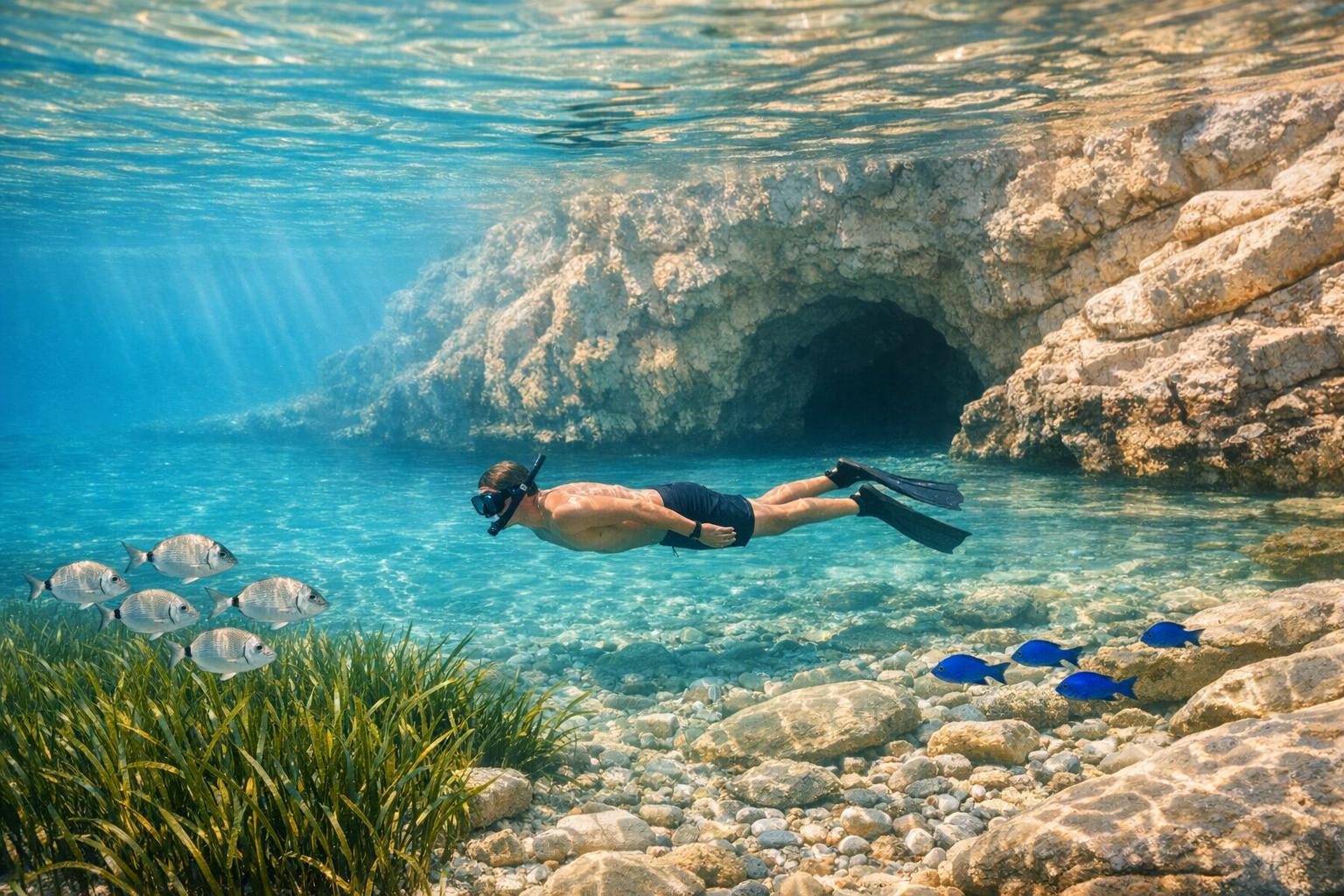
Ultimate Guide to Snorkeling the Albanian Riviera
The Albanian Riviera offers some of the best snorkeling experiences in Europe, featuring crystal-clear waters, diverse marine life, and stunning underwater landscapes. Stretching 120 km along the Ionian Sea, this hidden gem is affordable, less crowded than nearby destinations, and easily accessible thanks to the Llogara tunnel, which opened in 2024.
Key Highlights:
- Top Snorkeling Spots: Ksamil Islands, Karaburun-Sazan National Park, Gjipe Beach, Dhërmi Beach, and Radhime Beach.
- Best Time to Visit: May to October, with warm water temperatures (20–27 °C) and high visibility (up to 30 meters).
- Gear Tips: Bring your own mask, snorkel, fins, and water shoes for comfort and safety.
- Marine Life: Expect to see damselfish, wrasse, sea bream, octopuses, and starfish. Watch out for sea urchins in shallow areas.
- Travel by Camper Van: Companies like WildGoat Albania offer camper vans (€120–€150/day) for flexible coastal exploration.
Whether you're a beginner or an experienced snorkeler, the Albanian Riviera provides a mix of shallow, calm waters and adventurous underwater caves. Plan ahead to secure accommodations and enjoy this Mediterranean treasure.
KSAMIL SNORKELING - ALBANIA UNDERWATER - 4K - 2022
sbb-itb-c1cbda2
Best Snorkeling Locations Along the Albanian Riviera
Stretching from Vlorë to the Greek border, the Albanian Riviera offers a stunning variety of underwater landscapes. Whether you're a beginner or an experienced snorkeller, there's something here for everyone. These five locations combine easy access, vibrant marine life, and crystal-clear waters to deliver unforgettable snorkelling experiences.
Radhime Beach
Located just 15–20 minutes south of Vlorë, Radhime Beach is a great spot for those new to snorkelling. The pebbly shoreline helps maintain excellent water visibility - often exceeding 15 metres - while the protected bay makes it family-friendly. Parking costs around €2–3 per day, which is convenient if you are camping in Albania, and buses from Vlorë charge about 100 Lek (around €0.80). Keep in mind that the seabed is rocky, so water shoes are a must. For the best experience, visit in May, June, or September when the water is warm, and the crowds are smaller.
Karaburun-Sazan National Park
Spanning 125.70 km², this marine park is a haven for seasoned snorkellers. The western coast of Sazan Island features dramatic reefs that descend up to 40 metres, alongside historic shipwrecks from Greek, Roman, and WWII eras. The area also boasts impressive underwater caves like Haxhi Ali Cave and Dafina Cave, once used by pirates. With over 167 species of invertebrates and the chance to spot turtles like loggerheads or leatherbacks, the park is teeming with life. Access is mostly by boat from Vlorë or Radhimë, with tours starting at about €25. For a more immersive experience, guided snorkelling tours, such as the Snorkeling 360 Experience, cost around €40 and come highly rated (4.7/5 from 162 reviews).
Dhermi Beach
Dhermi Beach combines a striking white pebble shoreline with crystal-clear waters. The underwater terrain features channels and grottos, offering snorkellers an exciting environment to explore. The gradual depth changes make it a versatile spot, providing a more dynamic experience compared to the calmer waters of Radhime.
Gjipe Beach
Nestled at the mouth of a limestone canyon, Gjipe Beach is a secluded gem. Reaching it requires a 30–45 minute hike, but the peaceful atmosphere is worth the effort. The water deepens quickly just a few metres from the shore, and small caves along the canyon walls become especially accessible at low tide, making it a unique spot for snorkelling enthusiasts.
Ksamil Islands
Known as the "Maldives of Europe", the Ksamil Islands are perfect for families and beginners. The shallow, turquoise waters between the three islands rarely exceed 3 metres in depth, creating a safe and inviting environment. The sandy seabed and gentle conditions allow for extended snorkelling sessions while showcasing a variety of marine life. Swimming between the islands is a highlight, thanks to the calm, warm waters.
These diverse locations along the Albanian Riviera offer something for every snorkeller, from tranquil, shallow waters to dramatic underwater caves and shipwrecks. Whether you're planning a family outing or an adventurous dive, campervan hire in Albania makes exploring the Riviera easy.
When to Snorkel: Seasonal Conditions
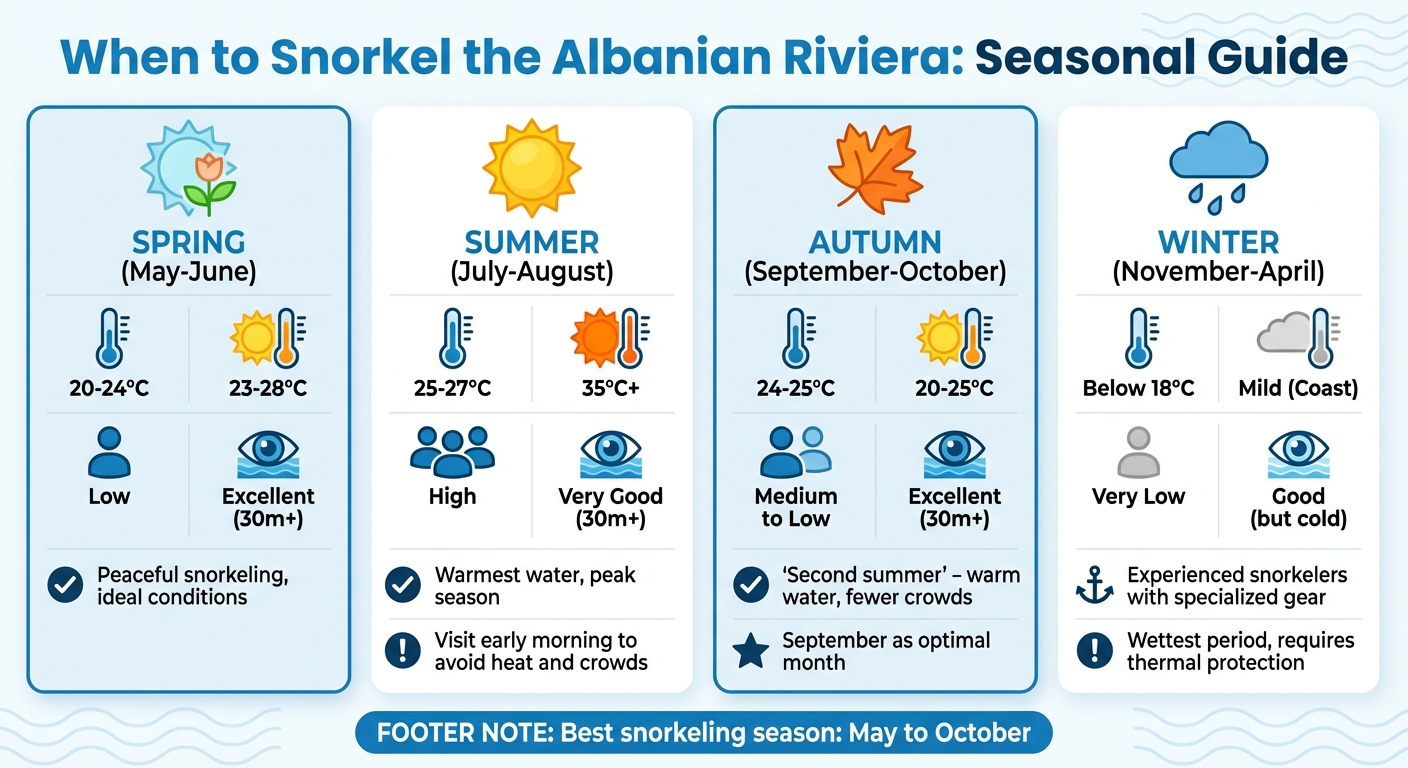
Best Time to Snorkel Albanian Riviera: Seasonal Conditions Guide
Timing is everything when it comes to snorkelling along the Albanian Riviera and its beaches. The best period stretches from May to October, when the waters are warm, and the sun shines consistently. The coastline boasts exceptional visibility, often exceeding 30 metres, thanks to its pebbly seabeds that prevent silt from clouding the water.
| Season | Months | Water Temp | Air Temp | Crowd Level | Visibility |
|---|---|---|---|---|---|
| Spring | May–June | 20–24°C | 23–28°C | Low | Excellent (30m+) |
| Summer | July–August | 25–27°C | 35°C+ | High | Very Good (30m+) |
| Autumn | September–October | 24–25°C | 20–25°C | Medium to Low | Excellent (30m+) |
| Winter | November–April | Below 18°C | Mild (Coast) | Very Low | Good (but cold) |
Here’s a closer look at what each season brings, so you can make the most of your snorkelling adventure.
Spring and Summer (April to September)
April marks the start of the snorkelling season, though early spring may call for a thicker wetsuit. By May and June, the days grow longer, the sun beams down, and the crowds are still minimal, creating a peaceful setting for snorkelling. Peak summer months, July and August, bring water temperatures up to 27°C, but air temperatures can soar past 35°C. To beat both the heat and the influx of visitors, it’s best to head out early in the day.
September, often referred to as the "second summer", is a gem for snorkellers. The sea remains warm at around 24–25°C, visibility is fantastic, and the atmosphere becomes calmer as the high season winds down. It’s the perfect time to enjoy the Riviera without the summer rush. This season also highlights the diverse Albanian landscapes and nature at their most vibrant.
Autumn and Winter (October to March)
October signals the start of cooler conditions. Water temperatures range between 18°C and 25°C, and the weather becomes less predictable. By November, rain becomes more frequent, making it the wettest month of the year. From November through March, the coastline remains mild but damp, with water temperatures dipping below 18°C. Snorkelling during this period requires specialised gear to handle the cold, and the area sees far fewer visitors, offering a quieter, albeit chillier, experience.
Snorkeling Gear and Equipment
When exploring the underwater beauty of the Albanian Riviera, having the right snorkeling gear can make all the difference. The rocky coastline and crystal-clear waters call for reliable equipment, with a few extras to ensure a more comfortable experience.
Required Snorkeling Equipment
Start with a traditional snorkeling mask - either single or double lens. Avoid full-face masks, as they can pose serious safety risks. The Oceanic Society cautions:
"Stay away from full-face masks. They are dangerous. Full-face masks can be difficult to remove, fill accidentally with water, and in some extreme cases cause drowning".
To ensure a proper fit, press the mask against your face (without using the strap) and inhale through your nose. If it seals snugly, it’s the right size. Before using the mask for the first time, clean the inside of the lenses with a small amount of toothpaste to remove any residue that could cause fogging.
A basic snorkel is another must-have. Stick to a simple J-shaped or freedive snorkel, as they are more dependable than models with extra valves that can fail.
Fins are essential for navigating the coastal currents. Wayne Sentman highlights their importance:
"Fins are your security blanket. They get you out of currents, they allow you to cover large distances, they boost your swimming efficiency".
Choose between full-foot or open-heel fins based on your comfort and the local water conditions.
For the pebbly beaches of the Riviera, water shoes with rubber soles are invaluable. These typically cost 15–25 € (1.500–2.500 ALL) locally, though buying them beforehand might save you a bit. Beaches like Himara, Dhermi, and Gjipe often have uneven surfaces, which can be tough on bare feet.
Water temperatures vary depending on the season, so consider a wetsuit or rash guard for added protection. A 1–2 mm wetsuit or rash guard works well for summer waters (24–26 °C), while a 3/2 mm wetsuit is better for cooler conditions (20–22 °C). Additionally, UV levels in July and August can be extreme (10–11), so covering exposed skin is essential.
| Gear Item | Recommended Type | Purpose |
|---|---|---|
| Mask | Traditional single/double | Safer and easier to clear |
| Snorkel | Simple J-shaped | Reliable and easy to clear |
| Fins | Full-foot or open-heel | Help navigate currents efficiently |
| Water Shoes | Rubber-soled | Protect feet on pebble beaches |
| Wetsuit | 1–2 mm or rash guard | UV protection in warm water |
| Wetsuit | 3/2 mm | Thermal retention in cooler conditions |
For a more enjoyable snorkeling trip, a few optional accessories can come in handy.
Optional Accessories
A 5–10 litre dry bag is perfect for keeping your phone, wallet, and other valuables safe during boat rides or while exploring remote coves like Gjipe and Filikuri. If you want to capture the underwater scenery, action cameras like GoPro, DJI, or Insta360 are excellent for video, while the Olympus TG series is a great choice for still photography.
Given the high UV exposure along the coast, reef-safe sunscreen with SPF 50+ is a must. Local prices can range from 15–20 € per bottle, nearly double what you’d pay at home, so it’s a good idea to bring some with you. A reef-safe mask defogger is another useful item. Pei Lun Lee from the Oceanic Society shares:
"I use my Stream2Sea high quality + reef safe mask defogger and it works every time (and better than my own spit). It keeps my mask clear to see all the tiny nudibranchs for 2+ hours".
Other helpful items include a neoprene mask strap cover, a microfibre quick-dry towel, and a foam sit-pad (300–500 ALL) for added comfort. If you plan to snorkel until sunset at remote spots, bring a headlamp for navigating rocky trails in the dark. Lastly, carry at least 1.5–2 litres of bottled water per person, as tap water isn’t safe to drink and facilities may be limited.
Safety Tips and Marine Life
Safety Guidelines
The Albania riviera and beaches offer crystal-clear waters that are undeniably inviting, but snorkelling here requires a bit of preparation to ensure a safe and enjoyable experience. First and foremost, never snorkel alone - always bring a buddy who can assist if needed. Beaches like Dhërmi, Himarë, and Gjipe, known for their rocky coastlines, make wearing proper footwear essential to protect against sharp rocks.
During the summer, the UV index can be intense, reaching levels of 10–11 in July and August. According to Himara.net:
"The UV index along the Albanian Riviera hits 10–11 in July and August, and most beaches have zero natural shade. Visitors who bring a small sunscreen bottle and a baseball cap end up burned by day two".
To avoid this, use a high-SPF sunscreen (50+) and reapply frequently. A UV swim shirt is also a smart choice, especially for longer snorkelling sessions.
If you’re exploring remote coves like Filikuri, Gjipe, or Akuarium, be aware that these areas often lack phone service and facilities. Download offline maps, share your plans with someone, and pack essentials: bottled water, a basic first-aid kit, and a dry bag for your valuables. For beaches like Gjipe that require a hike, sturdy trail shoes are a must for the descent, with water shoes handy for navigating the shoreline.
Before entering the water, always check the local conditions. Strong winds or rough seas can make snorkelling dangerous, and if you’re not a strong swimmer, stay close to the shore. The Ionian Sea offers excellent visibility - usually around 15–20 metres - but currents can sometimes strengthen unexpectedly. If you feel fatigued or encounter stronger currents, swim parallel to the shore until it’s safe to return.
By following these tips, based on local recommendations, you’ll be well-prepared to enjoy the Riviera’s underwater wonders.
Common Marine Species
The Albanian Riviera’s underwater world is vibrant and full of life, especially in rocky areas and protected coves. Look out for damselfish, wrasse, and sea bream darting around the rocks, while starfish cling to submerged stones. However, sea urchins are common in shallow areas, so always watch where you step or place your hands.
You might also spot octopuses tucked into crevices, while crabs and shrimp scuttle along the seabed. In deeper waters, particularly near Karaburun-Sazan National Park, keep an eye out for grouper and, occasionally, a moray eel hiding in rocky nooks. These creatures are harmless as long as they’re left undisturbed - so resist the urge to touch or feed them.
The waters here are generally safe, with no dangerous sharks or widespread jellyfish to worry about. To help preserve this beautiful marine environment, avoid disturbing coral formations and refrain from collecting shells, rocks, or marine life. Instead, capture the beauty with your camera and leave the underwater world as pristine as you found it, so future snorkellers can enjoy it too.
Reaching Snorkeling Spots by Camper Van
Benefits of Camper Van Travel for Coastal Exploration
Traveling the Albanian Riviera in a camper van opens up a whole new way to discover hidden snorkeling gems. Instead of sticking to rigid hotel schedules or fixed locations, you can park right at breathtaking beaches like Gjipe or Dhërmi and wake up with the waves just steps away. Imagine starting your day with the clearest waters for snorkeling, all without the hassle of commuting.
The real magic lies in the access a camper van provides. Many of the Riviera's top snorkeling spots - those secluded coves with crystal-clear waters - are tucked away at the end of narrow, unpaved paths. A camper van can handle these routes, taking you to places that standard tourist transport can’t reach. Plus, it allows you to embrace spontaneity. If local fishermen in Qeparo mention calm waters nearby, you can pack up and head there on a whim, free from the constraints of pre-booked stays. This kind of freedom ensures you’re always in the right place at the right time to catch the best snorkeling conditions.
Beyond access, the convenience of traveling by camper van is unbeatable. With an on-board kitchen and plenty of storage, you can prepare fresh meals, keep your snorkeling gear organized, and avoid the hassle of packing and unpacking at different accommodations. Pick up fresh seafood straight from local fishing boats and cook it at your leisure. During the busy summer months, especially in July and August, when parking at popular beaches like Dhërmi gets crowded fast, arriving early in your camper van secures your spot - and gives you a head start on the best morning snorkeling.
WildGoat Albania Camper Van Rentals
For those ready to explore the Riviera this way, WildGoat Albania is a standout option. WildGoat Albania offers premium camper vans designed specifically for Albania’s coastal roads. This family-run business, established in 2023, provides four fully-equipped vans, including Dhia (€120 per day) and Vjosa (€125 per day). Each van features a kitchen, bathroom, sleeping space for four, and solar panels for off-grid power. With a minimum booking of five days, these vans are perfect for an extended snorkeling adventure.
What makes WildGoat Albania special is their local insight. Renters receive custom maps with insider tips on the best wild camping spots and official parking areas near top snorkeling locations. They also offer 24/7 support via WhatsApp or phone, which is invaluable when navigating remote areas with patchy service. The booking process is simple, and the vans come with thoughtful extras like bike racks and canopy awnings - ideal for creating shade at beaches with little natural cover, helping you stay comfortable while you enjoy the coast.
Planning Your Snorkeling Trip
Key Points from This Guide
Let’s recap the essentials: The Albanian Riviera stretches over 120 kilometres of coastline, offering more than 20 incredible snorkeling spots. Among the highlights are Ksamil Islands, Karaburun-Sazan National Park, Dhermi Beach, Gjipe Beach, and Radhime Beach, all covered earlier in this guide. The best time to visit is between April and September, when water temperatures hover between 20–28 °C, and rainfall is minimal - less than 50 mm per month.
For gear, you’ll need the basics: a well-fitted mask, snorkel, fins, and a sun-protective rash guard. Check the gear section for a detailed breakdown. Safety is key - always keep an eye on weather conditions, snorkel with a buddy, steer clear of strong currents, and respect marine protected zones. The Riviera is home to over 300 fish species, including damselfish, octopuses, sea turtles, and moray eels. To protect these fragile ecosystems, avoid touching marine life during your adventures.
With Albania hosting 8.9 million visitors in 2024 - and the Riviera accounting for 60% of coastal tourism - snorkeling is growing in popularity, with a 25% annual increase. If you're planning to visit during the busy season (June to August), make sure to book your accommodation or camper van 3–6 months in advance to secure your spot.
Start Your Albanian Riviera Adventure
The Albanian Riviera combines affordable travel, breathtaking underwater scenery, and tranquil beaches - a rare find in the Mediterranean. For ultimate flexibility, consider exploring by camper van in Albania. Renting from WildGoat Albania is a great option. This family-run business, established in 2023, offers fully-equipped vans featuring kitchens, bathrooms, and solar panels, with daily rates ranging from €120 to €150. They also provide custom maps with insider tips on wild camping spots and parking areas near top snorkeling locations, making them a perfect fit for your trip.
Before you head out, download offline maps, pack your snorkeling gear, and get ready to dive into turquoise waters rich with marine life. Whether you’re a beginner enjoying the calm reefs of Ksamil or a seasoned snorkeler exploring the caves of Karaburun, the Albanian Riviera guarantees an unforgettable experience. Start planning now - prime spots fill up fast, especially in July and August when water temperatures peak at 26 °C.
FAQs
Do I need a wetsuit in summer?
Snorkeling along the Albanian Riviera in summer typically doesn't require a wetsuit. With sea temperatures hovering around 25–26 °C in July and August, the water is warm enough for most swimmers to enjoy without extra gear. However, if you're someone who feels the chill easily or plans on spending a long time in the water, a lightweight wetsuit might make your experience more comfortable.
How do I reach Karaburun-Sazan without a car?
If you don’t have a car, you can still visit Karaburun-Sazan by hopping on a speedboat tour or arranging a private boat trip along the stunning Albanian Riviera. These trips typically include stops at secluded bays, fascinating caves, and other breathtaking locations, giving you an easy and scenic way to experience the region.
Can I snorkel safely if I’m not a strong swimmer?
Snorkeling can be a safe activity even for non-swimmers, as long as the right precautions are taken. Since it mostly involves floating on the surface, advanced swimming skills aren't necessary. Using a flotation device, such as a life jacket, adds an extra layer of safety. It's best to stick to calm, shallow waters close to the shore. Above all, focus on feeling comfortable and keeping safety a top priority while enjoying the underwater scenery.