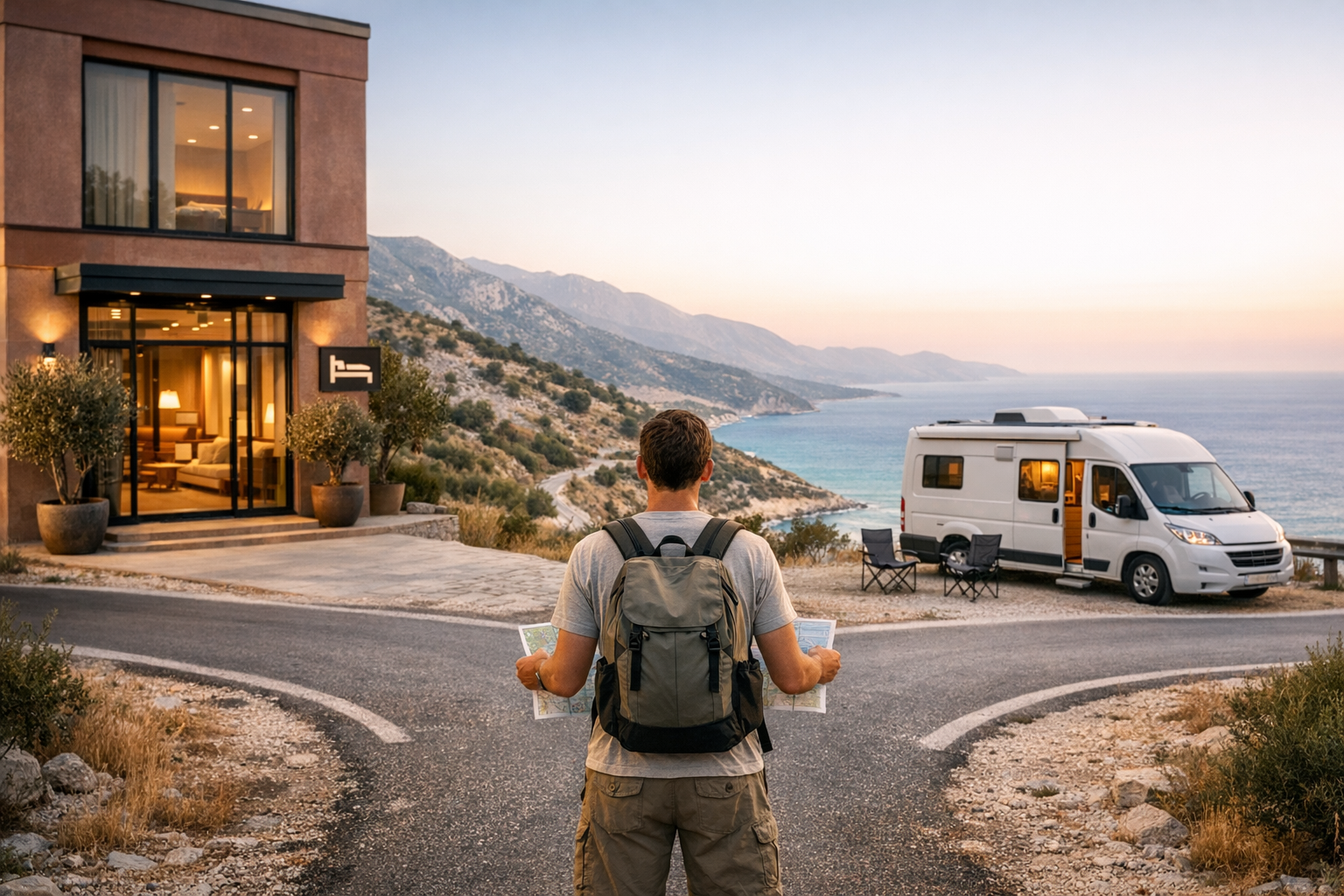
Hotel vs Camper Van: Which Is Better for Albania Travel
Deciding between hotels and camper vans for your Albania trip depends on your priorities: comfort or flexibility. Hotels offer convenience with amenities like air conditioning, Wi-Fi, and proximity to urban centers. Camper vans, however, provide freedom to travel off-the-beaten-path, combining transport and lodging in one.
Key Takeaways:
- Hotels: Cost €50–€150 per night, ideal for city stays, but fixed locations limit access to remote spots.
- Camper Vans: Cost €60–€140 per day, great for exploring rural areas and wild camping, but require driving on rough roads.
Quick Comparison:
| Feature | Hotels (€50–€150/night) | Camper Vans (€60–€140/day) |
|---|---|---|
| Location | Urban centers, resorts | Remote beaches, mountains |
| Amenities | Spa, Wi-Fi, room service | Kitchen, solar power |
| Flexibility | Fixed, requires transport | Go anywhere, anytime |
| Costs | Higher with car rental | Combines lodging & transport |
| Challenges | Parking, seasonal rates | Road conditions, waste mgmt |
Hotels suit those seeking comfort and city convenience. Camper vans are perfect for nature lovers who value freedom. A mix of both can offer the best experience.
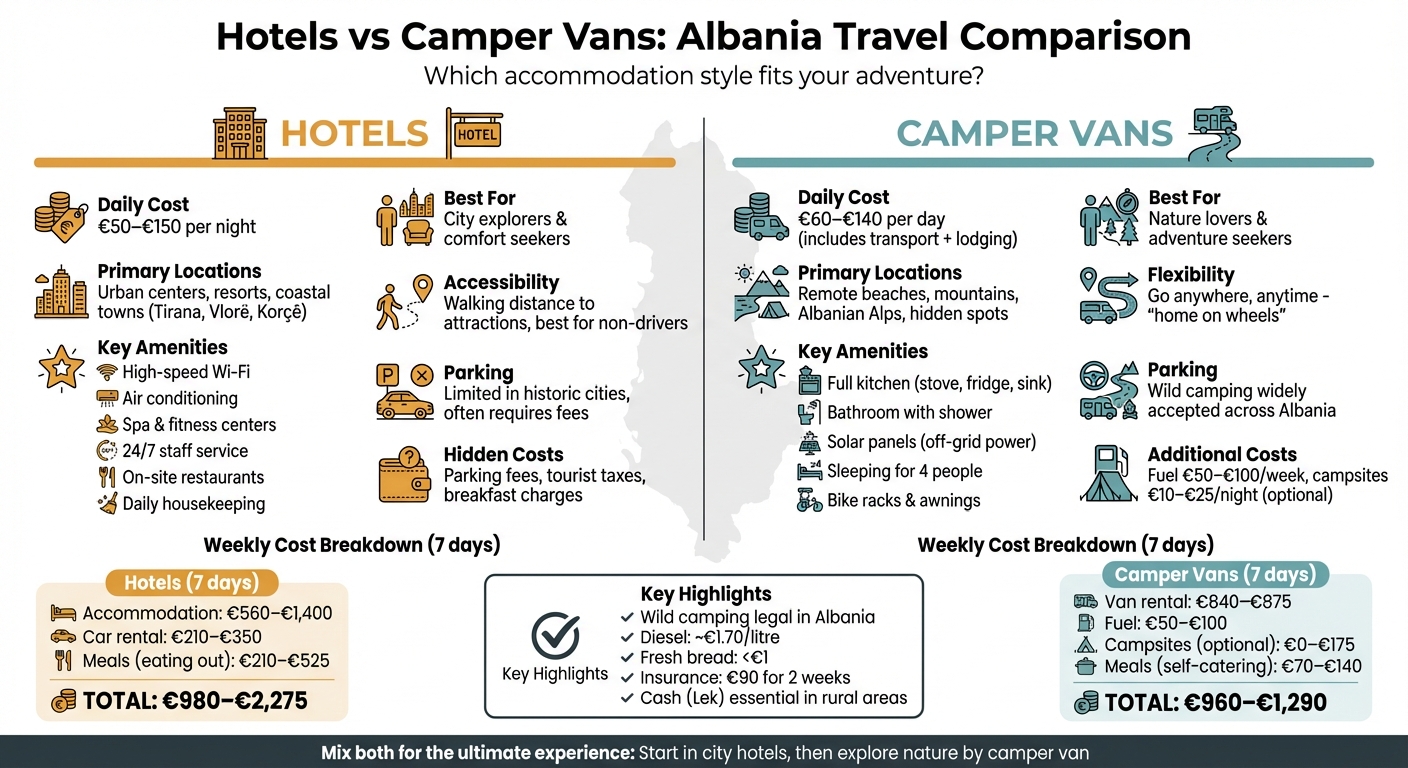
Hotels vs Camper Vans in Albania: Complete Cost and Features Comparison
Van Life In Albania: Thrilling Adventures And Raw Realities!
Before hitting the road, it is essential to understand the logistics of driving with a camper van in Albania to navigate the local terrain safely.
sbb-itb-c1cbda2
Hotels in Albania: Benefits and Drawbacks
Hotels in Albania provide a dependable level of comfort, making them an attractive option for travelers. They typically include high-speed Wi-Fi, air conditioning, flat-screen TVs, and minibars - amenities that camper vans might struggle to deliver consistently due to power limitations. For those seeking luxury, properties like the Xheko Imperial Luxury Hotel & SPA in Tirana, which boasts a guest rating of 9.5/10, offer even more: indoor and outdoor pools, full-service spas, saunas, and fitness centers. Add 24/7 staff availability, daily housekeeping, and concierge services, and you’ve got a hassle-free stay.
Staying in centrally located hotels in cities like Tirana, Vlorë, and Korçë means easy access to major attractions, often within walking distance. Many hotels also house on-site restaurants serving both local and Mediterranean dishes. Along Albania's stunning 360-kilometer coastline, some resorts even provide private beach access.
But hotels have their downsides. Their fixed locations and higher costs, especially during peak tourist seasons, can make exploring Albania's remote gems more challenging. For instance, reaching the Albanian Alps or hidden beaches often involves navigating unreliable public transport options like buses or furgons. During high season, mid-range hotel rates range from €50 to €110 per night, while luxury options exceed €100. In March 2026, hotels in Durrës averaged €85 per night on weekdays and €86 on weekends. Parking can also be a headache in historic cities like Berat and Gjirokastër, where narrow streets complicate vehicle access.
Another challenge is the uneven distribution of amenities. While major cities like Tirana offer reliable infrastructure, rural hotels may have limited facilities. Travelers should carry both cash in Lek and credit cards, as debit cards are often not accepted. That said, hotels are more likely to accept cards compared to rural vendors.
Hotels vs Camper Vans: Comparison Table
Here’s a quick look at how hotels and camper vans stack up in Albania:
| Feature | Hotels in Albania | Camper Vans in Albania |
|---|---|---|
| Nightly Rate | €50–€150 (mid-to-luxury) | €60–€140 per day (season dependent) |
| Primary Location | Urban centers and established resorts | Remote nature, mountains, and hidden beaches |
| Amenities | AC, spa, gym, daily housekeeping | Kitchenette, solar power, basic bedding |
| Flexibility | Fixed location; requires transport to sites | High; "home on wheels" with wild camping |
| Ease of Access | Best for non-drivers; central to cities | Requires driving on potentially poor roads |
| Parking | Often limited or requires a fee in cities | Flexible; wild camping is generally accepted |
Next, let’s dive into how camper vans make it easier to explore Albania’s off-the-beaten-path destinations.
Camper Vans in Albania: Benefits and Drawbacks
Hotels might offer comfort and predictability, but camper vans bring a level of freedom that's hard to match, especially when exploring Albania's varied landscapes.
With a camper van, you're not tied to fixed schedules or locations. Imagine waking up by the serene waters of Lake Koman, driving to a secluded beach on the Riviera for lunch, and ending your day in the stunning Albanian Alps. Albania is one of the rare European countries where wild camping is broadly permitted. This means you can park overnight in many natural spots without worrying about fees or restrictions. Travel expert Alex Tiffany highlights this unique aspect:
"Wild camping is widely tolerated and locals are generally very welcoming."
Another big plus is the all-in-one nature of camper vans. They combine transport, accommodation, and even a kitchen into a single rental. This setup can save you money, especially in remote areas where dining options are scarce. Weekly fuel expenses typically range between €50 and €100, while campsites cost around €10–€25 per night. Unlike hotels, which tie you to specific locations, camper vans let you take your "home" wherever you go.
However, this freedom does come with its challenges. Albania's roads can be tricky, with potholes, livestock crossings, and unpaved mountain paths requiring careful navigation. Speed limits are strictly enforced - 35 km/h in towns, 70 km/h on expressways, and 80 km/h on highways. Infrastructure in inland areas can also be sparse, so petrol stations and water refill points aren't always easy to find. It's smart to fill up whenever you can. GPS often fails in remote regions, and maneuvering a large van through the narrow streets of historic towns like Berat or Gjirokastër can be a real headache. Additionally, Albania remains a largely cash-based economy, so carrying enough Lek is essential for fuel, campsites, and smaller shops where card payments might not be an option.
WildGoat Albania Camper Vans
WildGoat Albania offers a fleet of camper vans that embody the freedom and convenience described above. Their options include fully equipped vehicles built for Albania's diverse terrain. For instance, the Dhia (a 2022 Fiat Ducato) starts at €120 per day, while the Vjosa (a 2024 Peugeot Boxer) costs €125 per day. Both require a minimum booking of five days. These vans are designed to sleep four people and come with a kitchen (featuring a fridge, two-burner stove, and sink), a bathroom (with a shower and toilet), solar panels for off-grid power, and extras like bike racks and awnings. With these features, you can remain self-sufficient even in areas far from modern infrastructure.
Camper Vans: Pros and Cons Table
| Aspect | Pros | Cons |
|---|---|---|
| Flexibility | Change locations daily without check-in hassles | Requires driving on rough, unpaved roads |
| Daily Costs | Combines transport and lodging; saves on meals | Higher upfront rental (€60–€140/day) |
| Terrain Access | Reach remote beaches, mountains, and parks | Large vehicles struggle in narrow historic streets |
| Amenities | Kitchen, bathroom, and solar power for independence | Compact space; manual water and waste management |
| Wild Camping | Free overnight stays in nature across Albania | Limited service points; must plan for self-sufficiency |
Cost Comparison: Hotels vs Camper Vans
Breaking down the numbers can make your travel choice clearer. For a traditional trip in Albania, expect to spend between €50 and €150 per night for a hotel room. Add to that €30–€50 per day for a rental car, and your daily expenses start at around €80–€200, not including meals or parking. Dining out can cost another €30–€75 per day.
Camper vans offer a different approach. Renting a van from WildGoat Albania costs €120–€125 per day, and this price includes transportation, accommodation, and a kitchen. With the built-in kitchen (equipped with a stove, fridge, and cookware), you can shop at local markets, where fresh produce is about 25% cheaper than in Western countries. For instance, a loaf of fresh bread from a bakery costs less than €1, and organic vegetables are much more affordable compared to supermarket prices. Cooking your own meals can bring food expenses down to €10–€20 per day, compared to the €30–€75 you'd spend eating out.
You can save even more by wild camping, which is free. If you prefer facilities like showers and electricity, organized campsites typically charge €10–€25 per night. Additionally, camper vans like WildGoat Albania's Dhia and Vjosa models come with solar panels, allowing you to stay off-grid without paying for hookups. These features shift the cost balance in favor of camper vans.
Hotels, on the other hand, often come with hidden costs like parking fees, local tourist taxes, and extra charges for breakfast. While camper vans do use more fuel than standard cars, a week’s worth of diesel will set you back about €50–€100, with diesel priced at roughly €1.70 per litre. Keep in mind that many petrol stations and small shops in inland areas only accept cash, so it’s wise to check essential tips for camper van travel and have some on hand. You’ll also need third-party vehicle insurance, which costs about €90 for two weeks if purchased at the border.
Looking at a week-long trip, the numbers often favor camper vans, especially for flexible, self-catering travelers. A hotel stay could cost between €560 and €1,400 just for accommodation, with car rental and meals adding significantly more. In comparison, a seven-day camper van rental costs around €840–€875, with an additional €100–€200 for fuel and campsite fees. Cooking your own meals further reduces the overall expense. If you’re traveling as a couple or a small group, sharing the costs makes camper vans an even more economical choice. This cost breakdown adds to earlier discussions on amenities and accessibility, helping you decide which travel option suits your needs best.
Reaching Remote Destinations in Albania
Some of Albania's most breathtaking locations are tucked away from main roads and tourist-heavy areas. Take Gjipe Beach, for instance - it’s accessible only via a bumpy dirt road. If you’re staying at a hotel, you’ll need to park farther away and hike about 20 minutes to get there. But if you’re traveling with a campervan hire in Albania, you can drive right up to the beach and even camp there [20, 32]. Another example is the Llogara Pass, perched 1,043 meters above sea level. While most hotel travelers pass through on their way to coastal towns like Dhermi or Himara, camper van travelers can park at the pass itself and enjoy spectacular sunrise views [29, 30]. This kind of direct access is a big advantage over Albania’s limited public transport options.
Public transport in Albania rarely reaches the starting points of remote trails, and schedules can be unreliable. As one travel guide puts it:
"Having a campervan means you can go wherever, whenever - no timetables, no rushing for buses that may or may not show up".
Hotel-based travelers often have to juggle transport arrangements and schedules, which can feel restrictive. Camper van travel, on the other hand, offers the flexibility to explore at your own pace.
Albania’s rugged mountain regions pose even greater challenges for transportation. Destinations like Theth National Park and Valbona are known for their steep, narrow roads riddled with potholes. Standard rental cars often struggle on these unpaved tracks, making a 4×4 vehicle practically a necessity. Camper vans give you the freedom to navigate these valleys and even stay overnight in areas where hotels are nonexistent. For trips to remote spots like Narte Lagoon or Gjipe Beach, it’s wise to stock up on food and water ahead of time, as shops can be hard to find within a 15 km radius.
For those who want to fully immerse themselves in Albania’s untouched beauty, wild camping is widely accepted across the country [2, 29]. This means you can park your camper van in remote nature spots - whether it’s a mountain pass or a secluded beach - and wake up surrounded by pristine landscapes. Apps like Park4Night, iOverlander, or offline Google Maps are great tools for finding wild camping locations and navigating rural roads.
Cultural Experiences and Travel Tips
Where you stay can shape your entire experience in Albania. Urban hotels in cities like Tirana or Berat are perfect for exploring Ottoman architecture, museums, and buzzing café culture. A local espresso here won’t stretch your budget, and you’ll find historical gems like Bunk'Art nearby. However, city centres can feel crowded, especially during the busy tourist season.
For a completely different vibe, consider traveling by camper van. This allows you to dive into rural Albania, where the journey itself becomes part of the adventure. Picture this: sharing the road with goat herds, buying fresh produce from farmers at roadside stalls, and even being offered homemade raki by locals. It’s a glimpse into the famous Albanian hospitality that’s hard to replicate.
Travel reporter Natalie Compton’s summer 2024 trip offers a great example. She stayed at Bujtina Rragam in Shkodër County for €90 per night, where the host, Florian Ahmataj, served her a traditional breakfast. While coastal Himarë was bustling with families and competing music, her rural farm stay delivered a peaceful swim in a secluded lake with no other tourists in sight. Camper van travel often leads to these kinds of authentic encounters, with locals inviting travelers for coffee or a home-cooked meal. Hotels may showcase Albania’s lively urban traditions, but camper vans unlock the charm of its rural heart.
Whichever style you choose, preparation is essential. Always carry enough cash (Lek), as many rural businesses and campsites don’t accept cards - 120 Lek equals about €1. Credins Bank ATMs are a good option to avoid extra withdrawal fees. Offline maps and a local SIM card (Vodafone or One) are must-haves for navigating remote areas; a 100 GB data package for 30 days costs around €29. Pack layers, as summer nights in the mountains can be cool, while coastal days are warm. Stick to bottled water - 6 litres cost about €1 - as tap water has been linked to illness. If you plan to wild camp near villages, ask for local permission; residents are usually very welcoming. These tips ensure not just a smooth trip but also a deeper connection to Albania’s culture and hospitality.
Choosing Between Hotels and Camper Vans
When planning your Albanian adventure, deciding between hotels and camper vans boils down to your travel style and priorities. Each option offers unique perks, so the right choice depends on what kind of experience you're after.
Hotels are perfect for those who prioritize comfort and convenience. They deliver consistent amenities like rainfall showers, climate control, and organized breakfasts. Properties such as the Meliá Durrës or Mövenpick Hotel Lalez are great examples, offering luxury accommodations in bustling areas. Plus, they're ideally located in cities like Tirana, Berat, and Gjirokastër - places where navigating and parking a camper van can be tricky.
On the other hand, camper vans are all about freedom and flexibility, especially if you're drawn to Albania's stunning natural landscapes. Public transport often falls short when it comes to reaching remote gems like Theth, Valbona, or hidden beaches along the Riviera. That's where WildGoat Albania camper vans come in. Fully equipped models like Dhia (€120/day) and Vjosa (€125/day) provide not just transportation but also lodging and cooking facilities, complete with solar panels and 24/7 roadside assistance. For rugged terrain or narrow roads, a 4×4 model is a smart choice.
If you can't decide, why not mix it up? Start your trip with a few nights in a Tirana hotel to soak in the urban vibe, then switch to a camper van for a week of coastal and mountain exploration. This way, you enjoy the best of both worlds - city comforts and the thrill of the open road.
FAQs
How many days do I need for a camper van trip in Albania?
To make the most of a camper van trip through Albania, set aside at least 2 to 3 weeks. This timeframe gives you the flexibility to visit the country’s key attractions, travel at an unhurried pace, and soak in its stunning landscapes and rich traditions.
Is wild camping safe and allowed in Albania?
Wild camping in Albania is a common and generally safe activity, particularly in secluded spots like mountain valleys, beaches, and rural areas. Although there aren't strict rules governing it, locals are typically welcoming, provided you camp responsibly. Be mindful to steer clear of private property unless you have permission and avoid protected zones such as national parks. To make the most of your experience, stick to responsible camping habits - leave no waste behind and treat nature with care.
Do I need a 4×4 camper van for Albania’s roads?
If you're planning to explore Albania, especially its mountain villages and remote areas, a 4×4 camper van is highly recommended. Many roads in these regions are rough and often demand off-road capabilities. For main roads and cities, a standard camper van will usually do the job. However, a 4×4 gives you the freedom to venture into Albania's more rugged and less accessible terrains.